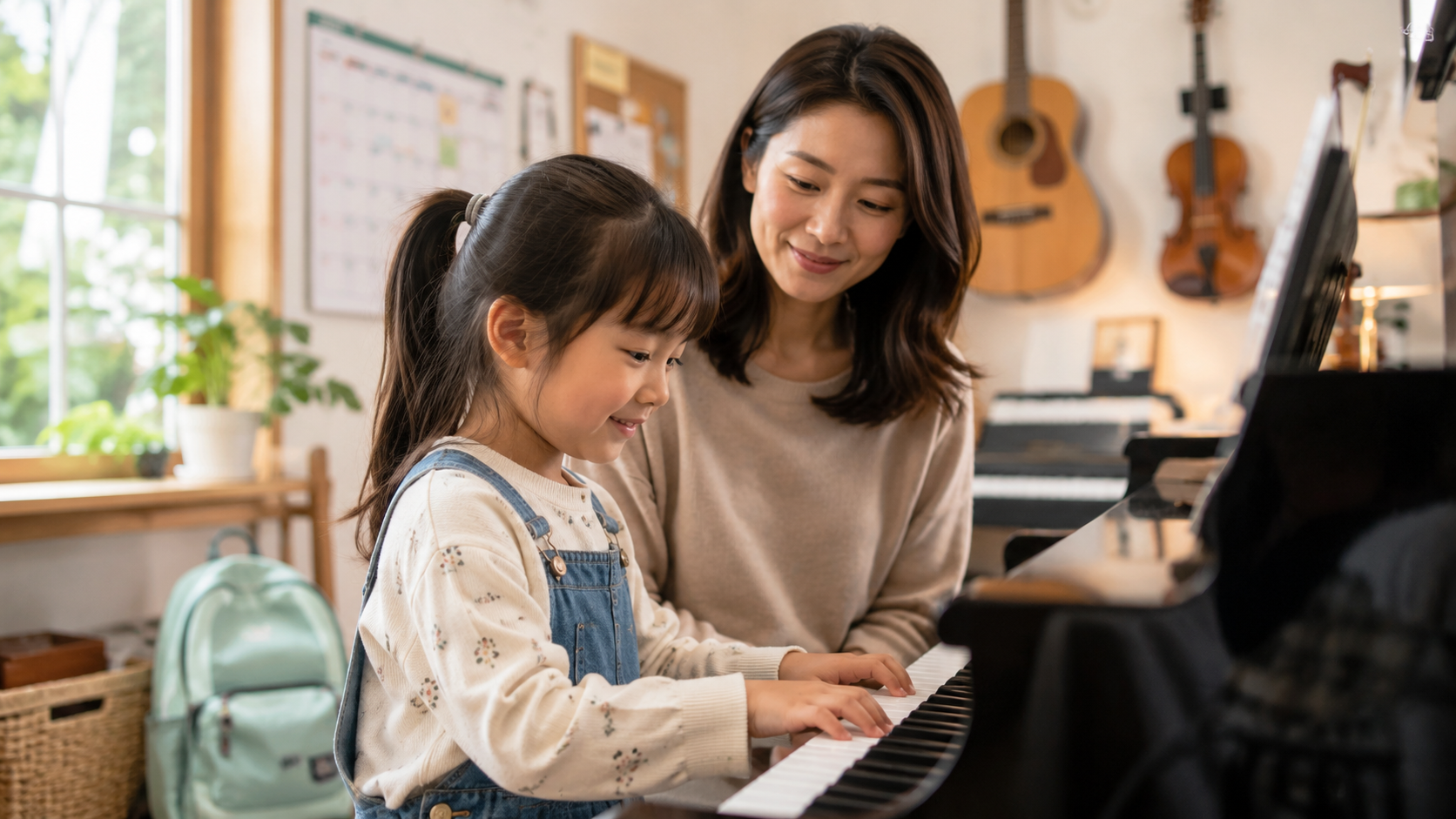
We often hear from adults who have been thinking about music lessons for a long time. Maybe you played an instrument years ago and the memory of that joy has been nudging you to return. Perhaps you're a complete beginner who always wished you could start, but life simply got in the way. It's common to feel a sense of hesitation, especially when the calendar turns to a new year. There's a cultural idea that January is the only time for a “fresh start”; a moment when you must immediately adopt new habits or resolutions perfectly. If you didn't start on January 1st, or even if you feel like you've missed the window entirely, we want to gently reassure you: January, or any month for that matter, is not too late.
We know the primary concern is often internal: the fear of judgment or feeling “too old” to learn something new. We want to be clear that this feeling is completely normal, but it doesn’t reflect reality. Learning music as an adult is fundamentally different from learning as a child. You bring a lifetime of experience, discipline, and emotional depth to the process. You are not competing with anyone; this is a personal journey about enrichment and joy. Our adult students thrive in a supportive environment where the focus is on progress, not perfection.
The idea of waiting until you are “ready” often means waiting for a perfect moment that never arrives. Perfectionism can be the biggest barrier to beginning. You might worry that you need to practice for hours every day, know music theory beforehand, or have some innate “talent.” We want to gently set those thoughts aside. Music lessons aren’t about proving talent; they are about cultivating a skill and finding personal fulfillment.
The most important thing you need is simply a desire to explore. We find that small, focused, consistent steps are what truly matter over the long term, and our teachers support those sustainable efforts. Putting your fingers on your instrument for a few minutes daily is the key to learning and retention. Truthfully, you will find that doing so will yield better results than two or three days of stressful, long practice bursts. When it comes to acquiring any musical skill, less is more.
In your first lessons, the focus is on building a comfortable foundation. This involves a gentle introduction to your instrument and establishing a simple, realistic practice routine. We don't pressure you with complex theory or high-stakes performance expectations. Instead, we aim to make the learning process enjoyable.
The early steps are designed to be low-pressure and affirming, helping you find your musical voice without embarrassment. We often see that once adults realize how supportive and personalized the process is, their initial nervousness quickly fades.
Q: Will I be the only adult starting lessons?
A: Absolutely not. We teach many adults, from those who are complete beginners to those who are returning to music after a long break. You are joining a community of adult learners.
Q: How much time do I need to commit each week?
A: How much time you spend per practice session is not as important as the quality of the time you spend. Rather than focusing on minutes or hours, think about what you accomplished. Did you get through your weekly lesson? Did you identify a difficult section that needs more explanation? Did you feel a sense of progress, even if it wasn’t perfect?
Write down any questions you have and make note of areas that feel confusing so you can review them with your teacher during your next lesson.
Q: Is it harder to learn music as an adult?
A: Not at all. While children’s brains absorb information quickly, adults bring stronger discipline, focus, and a clearer understanding of goals. This means that while some aspects may feel like a slower start, adults often progress quickly in other meaningful ways. There are unique advantages at every age.